Thursday, September 1, 2022

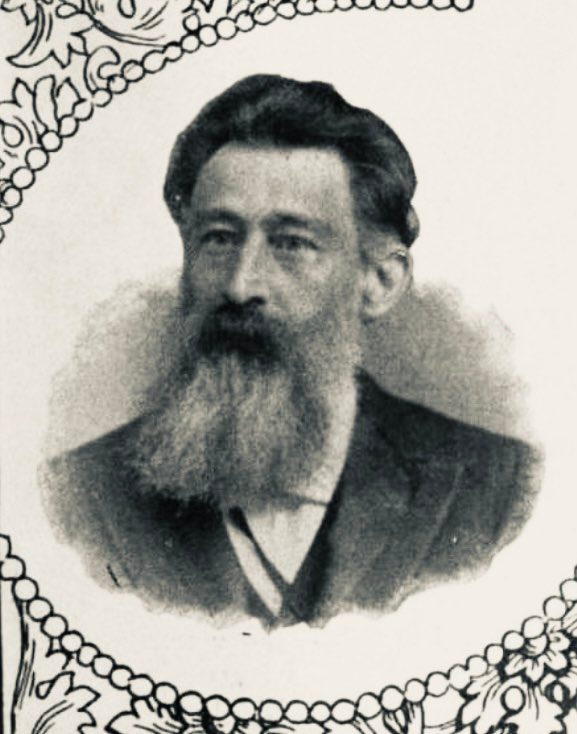
Rev. Samuel Weil: The Spiritualist Rabbi

Rev. Samuel Weil has all but been forgotten as an early Spiritualist leader, yet he stands unique in the history of the Spiritualist Movement in that he was a practicing Jewish Rabbi who came to embrace the teachings of Spiritualism. 

There isn't much written about Rev. Samuel's life, and only a few anecdotes of his early life are found in his book, The Religion of the Future: Or, Outlines of Spiritual Philosophy. One of these stories accounts a moment in his childhood which he used to demonstrate his own experience with psychic phenomena, 

"My father, physically a powerful man, who never was sick, went to America from Germany in 1841. My Mother, myself, and a brother remained in the old country. When my father was gone about three months, I awoke in the middle of the night weeping and sobbing bitterly. "O, mother, cried the four year old boy, "father is dead, I saw him being carried out of the room by some men." My father, who had been especially attached to me, had actually died in New Orleans from yellow fever, then raging epidemically there." 

Another short reference to his childhood comes from an article summarizing a speech he gave in Rochester, NY in 1897, ""He had inherited a religious feeling from his mother, but had early become a doubter and wished to have some manifestation of God. And this, said he, came at last in the principles of of Spiritualism." 

Aside from these later recorded anecdotes, the earliest reference to Rev. Weil is from an article written in 1876 stating that he had been a "Minister, Preacher, and Sabbath-School Teacher" for his congregation in Columbus, Ohio for three years, and was relocating to Denver, Colorado to serve a similar role in another congregation. 

In 1880 a new Synagogue was built in Bradford PA and the congregation hired Rev. Weil to relocate there as their Rabbi. In his book Religion of the Future, Rev. Weil mentioned in passing that he attended a Conference held in Pittsburg, PA by American Reform Rabbis as a member; he wrote that there was a proposal to deem all accounts of biblical miracles as "childlike fancies of their ancient ancestors" to which he states that he earnestly protested against this. 

The proposal apparently did not pass, and he later wrote that he felt science and spirituality do not have to necessarily contradict each other, stating "Modern Spiritualism will find the Bible an intelligible book, as far as miracles are concerned; for he has seen that the definition of a miracle does not involve a contravention of natural law, but an employment of a higher psychic force" 

At some point between 1880 and 1893 Rev. Samuel began to become more openly interested in Spiritualism, both in researching psychic phenomena, as well as studying and teaching Spiritualist principles. In his book, he gives an account of his experiences of the comfort brought to him through Spiritualist phenomena while visiting Lily Dale, New York: 

"As happens often, my father, who died when I was a child, left no portrait of himself behind, and the knowledge of the tentative process of photography in the year 1841, had not reached the rural German district in which we resided. Naturally, I often deeply regretted that I had no likeness of my father. In August 1888, I visited the mediumistic photographer, Dr. Keeler, at Lily Dale (Cassadaga) Chautauqua County, New York, and obtained, to my inexpressible delight, a photograph of my father, depicted on the same card whereon my own photograph appears. The spirit's bust is seen to the right of mine, and the features are quite plain and distinct, though usually such photographs are somewhat fainter than those of mortals. I posses a photograph, besides, of my transfigured mother, and two children of mine that had died. In the summer of 1889, I visited Dr. Keeler again and obtained two more photographs, representing other deceased relatives, and even the photograph of a lady who used to be a member of my flock."

In 1893 his work The Religion of the Future: Or, Outlines of Spiritual Philosophy was published. The book is set up as a text book on Spiritualism, which he also refers to as "Spiritual Religion" and "Spiritual Philosophy". 

His book is truly a testament to the fact that Rev. Samuel was probably one of the most profoundly educated Spiritualist leaders of his day; Rev. Samuel cites virtually every source he used in the text, which includes hundreds of quotes from both Jewish and Christian Scriptures, scientific articles and textbooks, works of German philosophy, works on Mesmerism, works of Emmanuel Swedenborg, and texts from several Spiritualist sources including: Andrew Jackson Davis, Cora L.V. Scott, Pascal Beverly Randolph, Hudson Tuttle, and Alfred Russel Wallace.

He seems to have almost a mastery of understanding over the volumes of Andrew Jackson Davis (which in itself is astounding) but also seemed to be particularly a student of Cora L.V. Scott, quoting her perhaps more than any other Spiritualist writer. 

In addition to all of this, he also references popular literature and poetry (in German and English), and regularly references Shakespeare. He also includes references to several other religious traditions, including Hinduism, Buddhism, Islam, and Theosophy. And in a passing reference also mentions his knowledge of the Talmud and Midrash. He also includes an additional list in the book for readers, that recommends other works to study that he did not cite from or mention in the book. 

The work is divided into three parts: first, The Facts, which largely deal with scientific and philosophical observations on psychic phenomena; second, The Source, which discusses Modern Spiritualism and it's principles, and third, The Consequences, which Rev. Weil lays out his own application of Spiritualist principles to ethics, and discusses social issues, with a particular focus on economic inequality and labor issues. 

In this final section of his work he also discusses Spiritualism as it relates to the Bible, placing it as a "new dispensation" in a line from Moses, the Prophets, and Jesus of Nazareth. Rev. Samuel reaffirms the fairly standard Spiritualist teachings on Jesus of Nazareth: that he was a highly spiritual ethical human being, who was "blindly worshiped" rather than followed as a teacher. Yet, Rev. Samuel seems to add a new layer of interpretation of Jesus that many Spiritualists before him had not touched on, that he was a specifically Jewish Sage, presenting universal teachings of Spiritualism clothed in Jewish wisdom. 

In 1895 Rev. Weil founded his own Spiritualist congregation in Bradford, PA named the Free Religious Association, which then changed it's name to the First Spiritual Church of Bradford in October 1896. According to an article, "The people who formed the society are believers in Spiritualism. The tenets of the church will be largely on the line of thought presented by Mr. Weil's book. The Religion of the Future.

An article in the New York Tribune gives an outline of the mission of Rev. Weil's Church:

1. The Society shall be called the Free Religious Association of Bradford.
2. The purposes of the association shall be the advocacy of a rational religion without a priesthood, a moral code without a theology, a God without a dogmatic system, a religion of liberty, recognizing no limits to thought; a religion of conscience, seeking the approval of no other monitor; a religion of reason, submitting all things to its decision; a religion of action, holding the chief good to be "man's humanity to man;" a religion of equality, acknowledging in its most comprehensive sense human brotherhood; a religion of love, yielding obedience to it as the great fundamental law of moral agency.
3. The association will be governed by the will of the majority of its members.

Rev. Samuel Weil may very well may have been the first Rabbi to publicly embrace the teachings of Spiritualism but he was certainty not the last. Spiritualism in both practice and its teachings have a long history of Jewish men and women serving as Ministers, Mediums, and Healers. Although this is unfortunately not well documented, that will hopefully change as time goes on.

Thursday, July 14, 2022

Murder at Sunset Spiritualist Temple

I randomly came across this story in the LA Times. The story happened in the 1940s and was covered in several articles and they were so over the top and campy and dramatic that a pretty straightforward investigation turned into this noir horror pulp fiction murder mystery novel, so naturally I had to write a blog about it. 

Before the hollow unseeing eyes of a grinning human skull, Mme. Lorraine met death in her mystic temple of spirits at 4384 Sunset Blvd. last night when her "adopted" daughter fired a bullet through her heart, according to police. 

Apparently Mme. Lorraine's actual name was Celeste Frank, she operated "Sunset Spiritualist Temple" a small parlor where she held seances and gave readings. Mme. Lorraine had been recently widowed, and sent for her young friend, Charlotte Jean LeNord, age 24, who she had unofficially adopted as her daughter to come live with her and keep her company. 

There in a darkened incense laden room where Mme. Lorraine gave readings in palmistry, cards, and from a crystal ball. Miss leNord told the offices how she had threatened the 50 year old Spiritualist with a .32 caliber revolver following an argument. 

Apparently after a very minor argument about Charlotte parking the car in the wrong place, a gun was accidently fired, one shot into the wall, and the other into Mme. Lorraine. Charlotte reportedly turned herself into the police. 

A silent macabre witness to the killing was an age colored human skull in which rested a crystal ball which Mme. Lorraine used in her divination of the future. 
    On the table near the skull a Bible, inscribed to Mme. Lorraine, lay open with a page turned down and a passage marked. "And the eye cannot say unto the hand, I have no need of thee: nor again the head to the feet. I have no need of you."  

When questioned by police Charlotte confessed that she had no idea how the gun went off, She stated, "I wish it hadn't happened. I'd give anything to have her back," and tearfully remembered that only recently she had read Mme. Lorraine's palm and found "she was destined for a violent end. Her life line ended in a star, that means violence." 

After a long extremely public trial, Charlotte Jean LeNord was found not guilty and was acquitted of the charges, which were deemed to be accidental.

The Sunset Spiritualist Temple is now the parking lot of Del Taco.

Wednesday, March 16, 2022

St. Joseph and New Orleans Spiritualism

The Spiritualist veneration of Saint Joseph in the United States largely goes back to New Orleans in the 1900s, where the mass immigration of Sicilians brought their passionate love and veneration for their patron, Saint Joseph. 

Saint Joseph has been especially loved by Sicilians since the middle ages, where legend says during a terrible drought his intercession was sought to bring rain, thus saving the island from famine. The Sicilians, grateful to their beloved saint, promised that they would hold a feast every year in his honor. 

In the early 20th century there was a mass immigration of Sicilians to the United States, and many entered the port of New Orleans, bringing their spiritual traditions to the city. His popularity as a Saint in New Orleans soon spread among Catholics, both Italian-American and African-American, and eventually to Spiritualists.

In the early decades of the 1900s, Sicilians were not considered to be white by the vast majority of Americans, and were even looked down upon by other Italians as being non-Italian. Many Sicilians and Southern Italians found a welcome home among the African-American Spiritualist Churches of New Orleans. Unlike the American Catholic church where they were segregated and ostracized, the Spiritualist Churches were not only more similar to their spiritual version of Catholicism: filled with wonder-working Saints, ecstatic visions, and communication with spirits of the dead, but the Sicilians also found that were welcomed warmly and with friendship by the African American Spiritualists.

Mother Leafy Anderson of the Eternal Life Christian Spiritualist Church of New Orleans lead a revival of Spiritualism in New Orleans and through several other areas. Through her charismatic preaching, spiritual gifts, music filled services, Mother Anderson took Spiritualists out of  hiding, and into the public eye.

Among her congregation she had several Italian members and was so beloved and respected by the Italian community of New Orleans that she was able to secure a loan from the Italian Homestead Association in order to pay for Eternal Life Spiritualist Church. It's known that she counted at least two Italian-American women among her disciples, one of which was Mother Lena Scovotto. 


Mother Lena was trained and ordained by Mother Anderson, and received her charter from Mother Anderson to open her own church, Sacred Heart Spiritual Church, also recorded as Sacred Heart Spiritualist Mission. Mother Scovotto was not only Mother Anderson's student, but was also a dear friend. 

According to an interview with Mother Scovotto's younger brother, he stated that Leafy Anderson and Lena Scovotto "were close, like two peas in a pod," He continued saying, "She taught my sister Lena, directed her, helped her to get started in the profession of being Spiritual. When Mother Anderson got sick, my sister Lena took care of her." 

Mother Catherine Seals of the Temple of Innocent Blood also counted numerous Sicilians and Italians among her followers, who considered her a living Saint. A story has been recorded of Mother Catherine miraculously healing a young Italian girl: 

“I was also told about a little Italian girl who was unable to walk and Mother Catherine cured her. Her parents brought her to the shrine and Mother Catherine kept telling the child to walk and she left her place and walked to Mother Catherine.” (The Spiritual Churches of New Orleans by Claude F. Jacobs, Andrew J. Kaslow) 

One of the most interesting documented accounts of this intercultural devotion to Saint Joseph among the New Orleans Spiritualist Churches was Mother Maude Shannon's story recorded in the work, Gumbo Ya-Ya. Mother Shannon of Daniel Helping Hand Spiritual Church received a vision from the spirit world saying that she needed to hold a feast to St. Joseph to feed the poor; her own description of the event was recorded in an interview: 

‘It been fourteen years now I been having my Saint Joseph Altar. That day I started out with thirty dollars to pay my rent and I met Saint Joseph and he told me to take the money and make a Saint Joseph Altar. I was scared I never would get my rent together again. I’m a poor widow woman and sometimes I gets up and there ain’t a cent in the house. Still, I got faith, so I built me the altar.’ 

‘I come out of my door that mornin’,’ says Reverend Maude, ‘and I heared a voice talkin’ to me just as plain as if there’d been someone walkin’ by my side. The voice says I must get together the sisters of the church, and we must gather candles and cakes and make an altar for Saint Joseph’s Day. So I threw out my hands to show the voice I done heared its words, and I called the sisters together and we went out with baskets to gather the food for our flock.’ 

Mother Shannon modeled her feast to St. Joseph extremely similar to how it was celebrated by Sicilians and Italians in New Orleans, A description of the feast describes the following: 

"Freshly-starched lace curtains hung at the windows. The small anteroom, usually used for a dressing room, held the Saint Joseph’s Altar. Here walls and ceiling were entirely covered with white sheets, and the altar, taking up half the room, was literally concealed under platters and plates and bowls of food, most of it identical with that found on the altars in Italian homes of New Orleans" 

"There were the immense loaves of Italian bread — most of them shaped like rings — the Italian salads and seed cakes. There were shrimp and stuffed crabs and a huge lobster, and a hundred other kinds of foods." 

"In the front center was a cake baked in the form of an open book, covered with white icing and embellished with the following words in pink icing: ‘Come thou with us, and we will do thee good; for the Lord hath spoken good concerning Israel.’ There were the usual tall candles, decorated with pictures of angels and rosebuds." 

"Opposite the altar, on a mantel, were votive lights and smaller candles, and a box to receive offerings. A white man entered, stood before these, said a prayer, and dropped a coin into the box. On the altar, a white bowl also received money. Another contained Saint Joseph’s beans, and those dropping coins took a bean or two." 

An interesting point of gossip was also recorded that much of the food and work for the altars were rumored to have been contributed by gamblers from her section of the city, who donated money in exchange for "lucky beans" to help them in gambling. The "lucky beans" or "St. Joseph's beans" (or "mojo bean") in question are actually Fava Beans, which are a staple dish prepared on St. Joseph's day brought to New Orleans by Sicilian immigrants.

The practice of honoring St. Joseph on March 19th with elaborate altars continues to today, as St. Joseph continues to hear the prayers of those in need, whoever they may be. 

Thursday, February 17, 2022

Bishop Rebecca Belton: St. Ann's Spiritual Church

In September 1941 a service was held in New York City marking the consecration of Rev. Rebecca Belton as Bishop of the St. Ann's Assembly of Spiritualists. According to an article the service of consecration was held in a very high church style, with a processional of acolytes, choirs, ministers, and bishops of the church wearing robes indicating their rank, with the choir singing the hymn "Lead on King Eternal." 

Bishop Rebecca Belton founded the St. Ann Spiritual Assembly in 1934. In addition to her duties as Bishop and Pastor of her organization, she also offered counseling. One article states, she "will gladly help you to banish worries and fears by helping and aiding you through spiritual advice and counsel." 

According to an article Bishop Rebecca A. Belton was regarded as on of the leading women of the Spiritualist Church in America. She was ordained as a licensed minister in New York State, and was ordained to the ministry in 1933 following her graduation from the White Institute of Science. 

The St. Ann Assembly of Spiritualist was named after Saint Anne, traditionally held to be the Mother of the Virgin Mary and the Grandmother of Jesus. Although not mentioned in the New Testament, her story is included in the Apocryphal Gospel of James, and in works of Catholic tradition such as Butler's Lives of the Saints. Her feast day is July 26th and her most important shrine in North America is the Basilica of St. Anne de Beaupre in Quebec, Canada. 

Bishop Belton's main church was St. Ann Spiritual Church. The Church held Sunday Services with included Healing and Messages, and also a weekly Sunday School. She Church also offered Communion services every first Sunday. 

Bishop Belton also organized several conventions and banquets; according to an article, one of the objectives of these meetings was to launch a program that would give the public a better idea of the work and purposes of established Spiritualist Churches.

Friday, January 28, 2022

Story of the Stars: Madeline Mareos

In the early decades of the 1900s the public perception of Astrology in the United States dramatically shifted from being considered a form of fortune telling to the scientific spiritual practice that is so popular today. 

This shift in part can be attributed to Evangeline Adams who ran a massively successful Astrology consulting business, wrote several popular books about Astrology such as Astrology: Your Place in the Sun and Astrology: Your Place Among the Stars, and successfully defended her astrology practice in court after being arrested for the practice of fortune telling. 

By the 1930s others were beginning to offer astrological consultations more publicly, and a new popular interest in astrology was beginning to saturate the public who were becoming more curious and interested in studying astrology. 

In 1932 in Rochester, New York Madeline Mareos advertised private instruction on Astrology as well as an Astrology class that met 8pm each Tuesday on Monroe Ave. Mareos had been lecturing and teaching Astrology at least as early as 1928 when she was listed as giving a lecture on Astrology at a Rosicrucian Study Center. 

Later in the year in the same year, the Rochester Astrological Society hosted a lecture in the Blue Room of the Hotel Seneca on "Popular Astrology," with Madeline Mareos as the main lecturer and also the President of the Society. 

From 1935 to 1936 Madeline Mareos had her own radio show every Monday and Friday at 1:15pm on WHEC called "Story of the Stars with Madeline Mareos," the tagline read that "Miss Mareos takes her listeners on a fascinating trip through the Zodiac in a style that has made her nationally famous." On the show Mareos would give practical instruction on the basics of Astrology, and advice for each sign of the Zodiac. 

In 1941 Madeline Mareos was publicly challenged by "a group of mathematicians and astronomers" sponsored by the Rochester Astronomy Club to publicly defend the teachings and principles of Astrology. When asked how she felt about the debate she replied, "I'm not worried about answering their questions, because I, too am a mathematician." 

During the event Mareos gave a lecture defending the scientific nature of Astrology and concluded explaining that "whether or not you believe in Astrology it works" as she finished, several of the men from the Astronomy Society challenged her to defend her knowledge of planetary movements, which she did. She reportedly "sprinkled predictions" through out her lecture, and seems to have accurately predicted that the United States would enter into War with Germany. 

Mareos continued to lecture at several events, particularly Women's Clubs and Society Dinners and Fundraisers. She also continued to offer private instruction on the principles of Astrology. 

Wednesday, January 19, 2022

Palm Springs Spiritualism: The Society of Spiritualist Studies

The earliest mention of the Society of Spiritualist Studies was in 1987. The Society was founded under the direction of a Rev. Peter L. King, and held regular Sunday Services. The Society advertised Healing, Lecture, and Message Services, and also noted that their workers were certified through the National Spiritualist Association of Churches (NSAC). 

A few events the Society sponsored were a series of lectures dedicated to the spiritual approach to holistic healing, and another lecture given by the director of the Desert Hospice Program which discussed end of life care. 

In 1987 the Society held their services at 55 N. Palm Canyon Drive, Palm Springs. In 1988 the Society changed locations and met at the Aladdin Chapel, in Indio. In 1989 a PO Box is given and rather than regular Sunday services being listed, a phone number was listed to call regarding dates and times for classes and discussion groups. 

During 1988 another interesting change seems to have taken place, the Society seems to have disaffiliated with the NSAC and became chartered with the American Federation of Spiritualist Churches. The American Federation of Spiritualist Churches was formed in 1980s when the Camp Etna Spiritualist Association in Maine disaffiliated themselves with the National Spiritualist Association of Churches, and reorganized under their own leadership. This most likely implies that Rev. Peter L King had a strong connection to Camp Etna, and possibly may have been from Maine. 

Although the Coachella Valley has had several spiritualists, psychics, and healers serve the community over the years, the Society of Spiritualist Studies was interesting to research as this seems to have been the only organized Spiritualist group that left any actual documentation of themselves. 

To end with a quote from the great Spiritualist leader Emma Hardinge Britten, "Geographically considered, the harvest ground of this great American movement has been spread over a surface of country extending from Maine to California."

Friday, December 3, 2021

Swami Spiritualists: Hinduism meets Spiritualism

In the late 1890s Swami Vivekananda was one of the first major Hindu leaders to bring Hinduism to the West as a missionary tradition. He established the Vedanta Society in New York in 1894, and lectured in most major American cities. In order to make Hindu teachings understandable to Americans he utilized the language of the New Thought Movement. 

The New Thought movement is different from the New Age movement that began in the 1970s. Originating in the late 1800s the New Thought Movement had its roots in New England Transcendentalists such as Emerson and Thoreau, Mesmerism, and also Spiritualism, it promotes positive thinking, practical self development, affirmative prayer, and various forms of mental healing. Some of the most well known examples of New Thought organizations are Christian Science, Unity, and Divine Science

Although the New Thought Movement is independent from the Spiritualist Movement, the language and terminology was shared by both traditions and many New Thought leaders and writers such as Ella Wheeler Wilcox or William Walker Atkinson also practiced Spiritualism.

With the the validation of Hindu leaders such as Swami Vivekananda, and the blending of religious vocabulary, Hinduism began to be understood by Americans as an ancient Eastern form of Spiritualism.

Another major influence was through the Theosophical Movement. Founded by Madame Helena Blavatsky. Madam Blavatsky based her movement on a fairly complicated mix of Neoplatonism, Hermeticism, Hinduism, and Esoteric Buddhism. Although Madam Blavatsky was initially inspired by Spiritualism, she quickly distanced her movement from Spiritualism. Nevertheless, Theosophical literature and teachings introduced many Spiritualists to the study of English translations of Hindu texts such as the Upanishads and Bhagavad Gita. 

As Spiritualists eagerly embraced the study of Hindu texts and meditative techniques, a somewhat new spiritual phenomena of Hindu Spirit Guides began to emerge among Spiritualists. 

As Spiritualists believed that Hinduism was essentially the same as their own faith, they began to seek advice and wisdom from the spirits of Hindu Sages who acted as Spirit Guides. 

With this new wave of popularity in Hindu themed Spiritualism, authors began to publish works under Hindu pseudonyms in order to sell books on Spiritualism and New Thought. William Walker Atkinson in particular published an enormous amount of his works under the name Yogi Ramacharaka, Swami Bhakata Vishita, and Swami Panchadasi. In addition to books there was also a rise in various spiritual products branded as Hindu such as incenses, oils, and talking boards. 

On a personal note, while I was researching local Spiritualist Churches here in Rochester, New York I found an advertisement in a Spiritualist Newsletter for a discussion group on "Hindoo Philosophy" that was organized by local Spiritualists in 1907.

From Puerto Rico to Rochester, New York: International Spiritualism in 1948

A very niche interest of mine is the overlap between the traditions of Spiritualism, Spiritism, and Espiritismo. Part of that comes from my ...