Monday, March 8, 2021

Spiritualist Baptism: Crowned With Flowers


American Spiritualism as a religious institution really doesn't have that many rituals. Most Spiritualist Churches were largely organized by philosophically minded Spiritualists who felt that rituals were at best a distraction from pure spiritual worship, and at worst, a superstitious hold over from the Dark Ages. 

However, despite the mission of some Spiritualists to have a religion free of ritual, the vast majority of Spiritualists very much wanted it. To this day most Spiritualist rituals are largely private, however, the concession was made for the ritual of Baptism. 

Possibly the first recorded Spiritualist Baptism took place in 1896 in Pittsburgh, PA. The ceremony was performed by a Mrs. Ida Whitelock from Boston, MA. The ritual was described as almost exactly as a Christian Baptism "save for the omission of the name of Christ." The child was instead Baptized "In the name of All Good." 

Although this was similar to a Christian ceremony, one unique difference that we shall see repeated in Spiritualist Baptisms is the central importance of flowers. In this first ceremony, the baptismal water was sprinkled on the child using a white rose, and a small white carnation was placed in the infant's hand. Those participating in the ceremony, the child's parents and godparents, were asked to hold a chain of flowers throughout the ceremony. 

In 1897 the Times-Picayune described the first Spiritualist Baptism occurring in New Orleans where "several young ladies and little children will be baptized with flowers, according to Spiritualist ritual" In this case we see an interesting transition to where the individuals are actually described as being Baptized with flowers. 

In 1911 another large Baptismal event was recorded in the South Bend Tribune which states that the Indiana Association of Spiritualists held a large Camp meeting at Camp Chesterfield which included "the baptismal with flowers of several children." This instance again repeated the Baptism specifically with flowers, but added another element: each child was crowned with a wreath of roses and was actually blessed by the Spirit Guide of each child. 

The Spiritualist Baptism is unique in these two aspects: 1. the individual is baptized with flowers (either petals or petals in water), and 2. a blessing of their Spirit Guides or Guardian Angels are prayed to during the ritual, to guide and keep them over the course of their life. These two parts form most of the standard form of the rite you will see in most Spiritualist Manuals. 

[Update]

When I wrote this in 2021 I explained that "baptism of children in Spiritualist Churches these days is somewhat uncommon, and adult baptism even less." I have actually seen the number of Spiritualist baptisms go up in recent years, and even had the privilege to officiate one.

Regarding adult baptisms, I wrote "Although I haven't seen many written instances of Adult baptism, I have been informed by a few individuals that it exists" I very recently came across a rare Spiritualist Manual that was probably published in the 1970s that has information going back to at least the 1950s or earlier that actually included a complete layout for the service of an adult Spiritualist Baptism. 

A few years ago when I was serving at a Spiritualist Church a friend suggested that we bring back this practice and also allow adults to participate and receive Spiritualist baptisms. I absolutely am for the idea, and I hope this beautiful ceremony might catch on again some day.


Friday, March 5, 2021

Spiritist Book of Prayers

Although Espiritismo is a form of Spiritism, most Espiritistas are far from strict Kardecists. The range of adherence among Espiritistas to Kardecist teachings can be anything from passing familiarity with the Spiritist Codification, to outright disagreement with the basic tenants of Kardecist doctrines such as reincarnation. 

On the spectrum of Spiritism those who are closest to the teachings of Kardec as set forth in the Spirit Codification (the books compiled by Allan Kardec) are often referred to as Espiritismo Científico, which emphasizes study of Spiritist texts and scientific development purely based on the theories and concepts found in the writings of Kardec. 

On the other end of the spectrum we have traditions such as Espiritismo Cruzado, which incorporate elements from traditions such as Lukumi or Palo, as well as Folk Catholic practices, and folk healing modalities. This is the form of Espiritismo that I will be discussing. 

Rather than the texts of the Spirits Codification, the main text that most Espiritistas associate with Allan Kardec is through the a small prayer book known as the Coleccion, or Collection of Selected Prayers

The title of this book comes from the last chapter of Allan Kardec's Gospel According to Spiritism, which lists various prayers for Spiritists. The prayers range from prayers to say during a séance, as well as blessings, and prayers for the sick or obsessed. The bulk of The Coleccion is made up of these prayers. 

The Coleccion also includes additional prayers and texts not found in Kardec's work. These are mainly from Spanish Spiritist texts, and include inspired poetry and prose writings that promote or teach Spiritist concepts. One of the most well known of these is the Naufrago, the Castaway's Prayer, or the Shipwreck Prayer.  Also included are general Catholic prayers such as the Hail Mary, and Our Father. 

The Coleccion provides the basis of Spiritist framework for most Espiritistas, and solidly places the two concepts of Prayer and Charity front and center. Perhaps the one unifying concept that all Espiritisatas will agree on is this central importance of faith, hope, and charity as the most important virtues that an Espiritista should live by. How this is interpreted varies, but the importance is near universal. 

With more English speakers, becoming familiar with Espiritismo (as well as more Kardecist forms of Spiritism) there is now a new opportunity to discuss the nature of this prayer book:  on one hand, the Coleccion has become a traditional part of Espiritismo, on the other hand, Espiritismo does not have a set specific liturgical language. 

The Coleccion itself is a translation from the original French prayers authored by Kardec. And when it was compiled was actually a highly creative work that included prayers and texts from different sources that were the most useful for individuals. 

Although not necessarily authoritative among all Espiritistas, The Spirits Book is actually extremely clear that it's not the words of the prayers themselves that matter, but the inner meaning that moves a heart closer to the Good Spirits and to God. 

I think as time goes on we will continue to see more creative and interesting approaches to both translation, and what prayers and texts will be used in a ritual aspect in Espiritismo as different people from different walks of life come to embrace Espiritismo, and Spiritism in general. 

Collection of Selected Prayers (English) 

This is an infamously terrible translation, and at this point I'm even surprised that it's still in print. The only possible use that I could have seen for this is that at one point in the past it was pretty much the only available English translation, and if someone wanted to attend a Misa but could not speak Spanish, this translation would give an English speaker a very vague understanding of what was being said. At this point though, there are much better translations. 

 
 Collection of Selected Prayers. Candita Gual 

This is the best, and only complete direct translation of the Collection into English. It's wonderful, readable, and includes all the important prayers. 

The one feature I find to be the most interesting (and this isn't a complaint) is the translator's choice to use the word Spiritualist instead of Spiritist through out the book. I have a few guesses as to why, but I'm mostly curious as to what her choice was. 


Spiritist Prayers, United States Spiritist Federation. H.M. Montiero 

This is actually a fantastic translation of Allan Kardec's prayers. It was translated by a brilliant author, and is the result of Brazilian Spiritism becoming more well known and available to English readers. It's pocket sized and is fairly cheap. The only issue some people may have is that this is very much a Kardecist Spiritist translation, and you will not find any of the extra material from Spanish sources in the book, or Catholic prayers. 


Helping Yourself with Selected Prayers, Vol. 2 

While this is not a translation of the Collection, it does have an entire section of prayers taken from the Collection including some of the more well known prayers only found in the Collection. The big benefit that this book has (in my opinion), is that it has tons of prayers to Saints, Folk Saints, Catholic Prayers, etc. It's an extremely useful book and actually one of my favorite prayer books. 

Wednesday, March 3, 2021

Past Botanicas of Rochester, NY

In my other blog I post some of my research on the history of Spiritualism in Rochester. Unfortunately, something that is even more under documented is the historical presence of Espiritismo in Rochester, as well as African Diasporic Religions such as Lukumi (Santeria) or Palo. 

I've written in another post about the historical connection that Espiritismo has to Rochester, and also mentioned that these traditions are still very much being practiced here today, but I wanted to share this small bit of research that I've found looking through Newspapers about some of the Botanicas that used to exist in Rochester. 

Botanica Santa Ana, 76 Lowell St. 1972 

Mrs. Carmen Betances, who says she "got the power" of Espiritismo at the age of seven in Puerto Rico has statues all over the tiny store as well as on the glassed in porch over at her home next door. She goes to New York once a month to replenish her supply of herbs and oils. 


Botanica San Lazaro, 264 Clifford St. 1983


"We are a religious store," says Aurora Lopez, whose mother, Julia Reyes, owns the San Lazaro. "But we also sell medicine." Julia Reyes had a dream fives years ago that told her to open Botanica San Lazaro. 


Botanica Santa Ana, 830 N. Clinton Ave. 1983 


"We go with the spirit. The spirit works through our bodies and tells us what to do." Treatment usually varies with the individual. "I have to let the people talk." says, Rev. Daniel Garcia "I listen to them say, "I feel this, I feel bad. I feel that. Sometimes a special herbal bath or oils will be prescribed."


Rochester currently has at least two Botanicas in the city, with Botanica Obatala Shango being the largest (both in Rochester, and also in Western, New York). Rochester has a very large community of Espiritistas, which being the historical birthplace of the Spiritualist Movement seems fitting. 

Regarding African Diasporic Traditions, Rochester is a fairly large center of Palo, with Lukumi (Santeria) coming in a close second. There is also a fairly decent sized community of individuals that practice 21 Divisions, or Dominican Vodu. 

Monday, March 1, 2021

The Curious Case of Leah Fox

Leah Fox is usually written off from the history of Spiritualism as the ‘other Fox sister.’ If she isn’t completely ignored in books, she will often be accused of having manipulated her younger sisters into becoming Mediums. 

Leah, in my opinion, is one of the most interesting figures of the early Spiritualist movement, not only as one of the three fox sisters, but her important role in the shaping of the religious aspect of the Spiritualist movement.  When her sisters were adult women making their own choices and leading their own lives as famous Spiritualist Mediums, Leah lead a relatively quieter life, performing private seances for guests at her home in Rochester (and eventually New York City). 

Leah was not the typical Victorian woman, she grew up in an environment before Victorian norms had become commonplace and in a more rural, and pioneer-esq environment; a much rougher and harsher way of life that was far from the picture-book tea parlor life that was considered the ideal norm for Victorian women to strive for.   

I feel this is one of the main reasons that she has been recorded by history in a more negative light than her sisters. While her sisters, in a decidedly Victorian way, could be excused as ‘tragic young women,’ Leah was a much more imposing figure: a strong willed, independent woman. 

Leah was married three times, was a single mother, provided for her own family primarily through her skills as a music teacher, and eventually was a very popular medium in her own right. Leah wrote her own record of the Spiritualist movement, which is still in print (online and in reprints), though not a hugely popular read these days. The work is titled The Missing Link in Modern Spiritualism by Leah Underhill (her married name). 

Although the work clearly states that it is not an autobiography, the work is very much written from Leah’s perspective. It discusses the events at Hydesville, as well as Leah’s own account of what occurred in Rochester as a result, the events that became of it, their family history of spiritualist phenomena, and many, many interesting accounts regarding the early history of the Spiritualist movement. 

An interesting point in the work that is largely left out of many works on the Fox Sisters is that Leah seemed to be very aware of the religious and spiritual dimension of this movement. Leah, seemed to understand that the movement was much larger and more important than a money making opportunity but rather a ‘new truth.’ 

She wrote: “the movement was not in our hands nor under our control. It had an object, and we, as reluctant and humble instruments, were in the hands of other and higher wills and forces, from whom it had proceeded, by whom it was directed, and, so to speak, engineered. We have since come to understand that all these events and incidents, perplexing and distressful as they were to us, were but the birthroes of a new truth, which was destined to revolutionize this world, and establish a communication between here and the hereafter; of the Earth and of the Spirit." 

In a glimpse into her personal spiritual feelings, Leah described an event that she experienced at one of the first seances in her home in Rochester in the terms of a spiritual conversion: 

“We were truly converted, and as the dear old Methodists used to say, “born again.” We could then realize that we had something to live for, something to hope for, in that sacred hour when each one in our humble group “lay at the feet of Jesus,” willing to be guided and directed in the paths of truth and duty."

While the events at Hydesville are often regarded as the beginning of the Spiritualist movement, it was largely in part because of Leah's strong-willed faith in the importance of the messages given to them by the Spirits, as well as her dedication to public demonstration of spiritual phenomena, that the events went from a curious local ghost story to become an international religious movement. 

Though I would hardly call Leah Fox a Saintly figure, I personally do not believe that she has earned the scorn and negative reputation that she has been given. I suggest to anyone interested to take the time to actually read Leah's book, and let Leah share her story, in her own words.

Tuesday, January 26, 2021

15 Years With Santa Muerte

As of this year I'll have been a devotee of Santa Muerte for 15 years. 

It's kind of strange to think about, because she's been so integral to my life at this point that it really doesn't seem that long. It's been a fascinating journey watching other people work with her and discover her. 

When I first began praying to her and working with her, there was almost nothing available in English. I mostly had to learn how to work with her by asking questions to people in person. When her presence was more online, I started to see how others both in Mexico and America worked with her, and see the changes and trends over time. 

I think one of the reasons she's so easily become part of my spiritual practice is that from the very onset is that one of the strongest elements of religious devotion in my own family growing up was the folk catholic veneration of the holy souls in purgatory. This devotion essentially became hybrid with Spiritualism, and so I pretty much grew up with the idea that the dead were not gone, and that death was not inherinetly bad or frightening. 

Most of the most important saints in my family (St. Rosalia, St. Gerard Majella, etc) are constantly depicted with skulls and bones, and the idea that the Angel of Death wasn't a daunting or scary figure was ingrained in me at a very young age. So when she came into my life she wasn't scary, unusual, or exotic, she was incredibly deeply familiar. 

I've decided that through out the year I'm doing to write a few different posts and musings about Santisima Muerte. So stay tuned for that! 

Friday, December 18, 2020

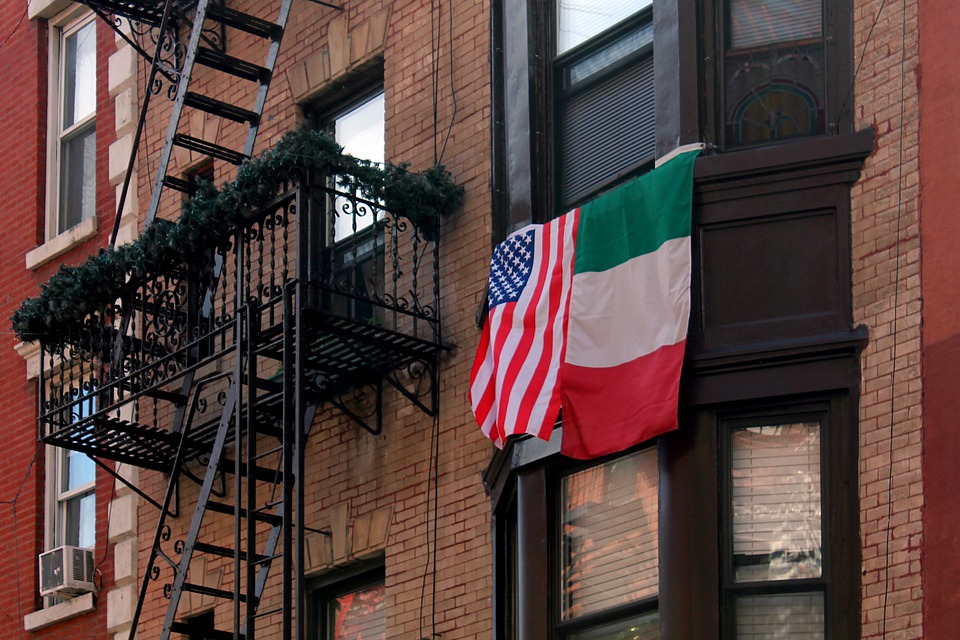
Italian American Folk Religion

Italian-American folk religion is the practical everyday spiritual reality of Italian-American immigrants. It is a unique cultural practice, with traditions and practices that are a blend of old world Italian religion and American cultural influences. 

Italian-American folk religion is somewhat distinct from Italian Folk Religion. Italy is regionally extremely diverse, with different cultural practices, and even languages being spoken in different areas. These different traditions and practices that may have never actually contacted another in Italy, became mixed in America through the intermixing of different immigrants from different areas of Italy. This was also further mixed with American spiritual customs and practices. So although I do look to Italy for an understanding of history, culture, and practice, the practice that I'm discussing tends to be more what people of Italian descent practice in America. 

This practice doesn't have a specific name, and most Italians will simply identify themselves as being Catholic; a common answer of many people about what these folk religious practices are is simply “the things we do" 

There are some names given to people that are practioners of this folk system of healing and prayer: some are called praticos, “a practioner” implying a kind of medical like skill; guaritori healer”, fattucchiere, fixers, donne che aiutano “women who help” and mago or maga, “magician” mago/a does imply that there is a magical knowledge present, but the title has connections to the “Magi” of the bible implying a level of goodness. 

In the past a title rarely, if ever, used to denote someone that practiced folk religion was Strega, or Witch. The title not only implied maliciousness and evil, but also denoted an almost inhuman nature. Today though the title Strega, has been reclaimed to denote someone who practices a healing and positive form of folk religion and magic, and many Italian-Americans will proudly refer to themselves as such. 

The practice of Stregheria (an older dialect term for Witchcraft) is a revival practice that while emphasizing the practices of folk herbalism, healing, and magical practices, deemphasizes Catholic practices in favor of Neopagan traditions. So although this is a perfectly acceptable modern practice, it is not the tradition most of our ancestors actually ever would have recognized. 

The worldview of Italian folk religion is rooted in a firmly folk Catholic view, but that world is not the Catholicism that most Modern American Catholics would understand. It's a world that is populated with spiritual forces and beings, that constantly influence and guide the destinies of human life. 

With the source of Creation and power coming from the remote and unknowable Mystery that is God the Father, this chain of power and magic is extended through the mediating influences of Jesus, the Virgin Mary, the Saints, Angels, and the Ancestral Dead. 

Also included in this worldview are the earthly powers of nature spirits and plant spirits, and finally the infernal powers of demons and restless ghosts. 

Through a combination of folk wisdom of herbal medicine and the sacramentals of the church, prayer, and spiritual gifts such as healing, prophecy, and mediumship, practitioners bring balance, healing, and blessings to the lives of those who seek their assistance. 

This practice isn't dead by any means, but it's very much at risk. Most elders that are familiar with these practices, or even knowledge of prayers and rituals are dying out without passing them on to their descendants. Thankfully there is a revived interest in preserving these traditions.

Friday, November 13, 2020

Mother Cabrini: Patron Saint of Immigrants

I wrote this as a post for Facebook a few years ago and have reposted it a bunch of times. I think it's about time I post it on my blog so it doesn't get lost, and today seemed a very fitting day. 

November 13th is the feast day of St. Francesca Saverio Cabrini, usually just called Mother Cabrini. Mother Cabrini is the patron Saint of immigrants. I’m not going to go super in depth into her life, but she felt called by God to become a nun, and felt that it was her purpose to go to America to help the poor and oppressed. 

One of the most remarkable aspects of her story is that she came to America as a mission. There’s a fairly strong bias among Americans to see America as the greatest country in the world. She did not. She knew fully well the horrors of poverty and discrimination that most Italians that had immigrated to America were facing, and was moved to leave her country to help those most in need. 

When she came to this country, there was a feeling of disgust for most immigrants (Italians in particular), and most people did not even want to let them in the country, let alone help them. She took it upon herself to leave a fairly comfortable life in Italy, to come to America with six other women, to help these people. She named her order the Missionary Sisters of the Sacred Heart of Jesus, in honor of the Love that called her to serve.

Although she came to help Italian immigrants, her love and kindness quickly extended to the multitudes of individuals living in abject poverty. She managed to open orphanages, schools to teach literacy and English as a second language, as well as simple skills people could use to find work; she founded hospitals and medical centers, and offered medicine and care for free to those who could not afford it. She took it upon herself to do these things, against popular opinion, because she knew that it was the right thing to do. 

I think we need to look to the life of Mother Cabrini for our own times. These stories are not isolated events removed from our modern times. On a personal level, her story brings to mind my own family who immigrated to America from Italy. 

On one side of my family, I’m descended from what today would be called “undocumented workers” or "illegal immigrants" who were hired and moved here by a private company, to work in the coal mines in Pennsylvania due partly to their skills of having worked in the sulfur mines in Sicily, but mostly because they were cheap labor, and they could be paid far less than American workers, these individuals, my family members, did not become citizens, yet lived the rest of their lives here and had children who were born Americans. 

On the other side, my great grandfather was sent to America for asylum by his parents when he was 15 years old, so he wouldn’t be drafted into the increasingly nationalist army, while he did communicate with his family throughout his life, he never saw them in person again. If he came here today, aged 15, and without a parent, he would be in a cage.

I think of these things, and I see so many similar stories today: immigrants coming to work here for a better life, refugees fleeing war torn countries, sending their children away knowing very well they might never see them again, just in the hopes that they might survive. 

These are the people that Mother Cabrini came to help; the time and people may have changed, but Mother Cabrini's mission remains the same. We need to consider being more like Mother Cabrini who opened her heart to be transformed by love; it allowed her to see all people as her brothers and sisters, in need of kindness and help. 

 "A new heart also will I give you, and a new spirit will I put within you: and I will take away the stony heart out of your flesh, and I will give you an heart of flesh."

From Puerto Rico to Rochester, New York: International Spiritualism in 1948

A very niche interest of mine is the overlap between the traditions of Spiritualism, Spiritism, and Espiritismo. Part of that comes from my ...